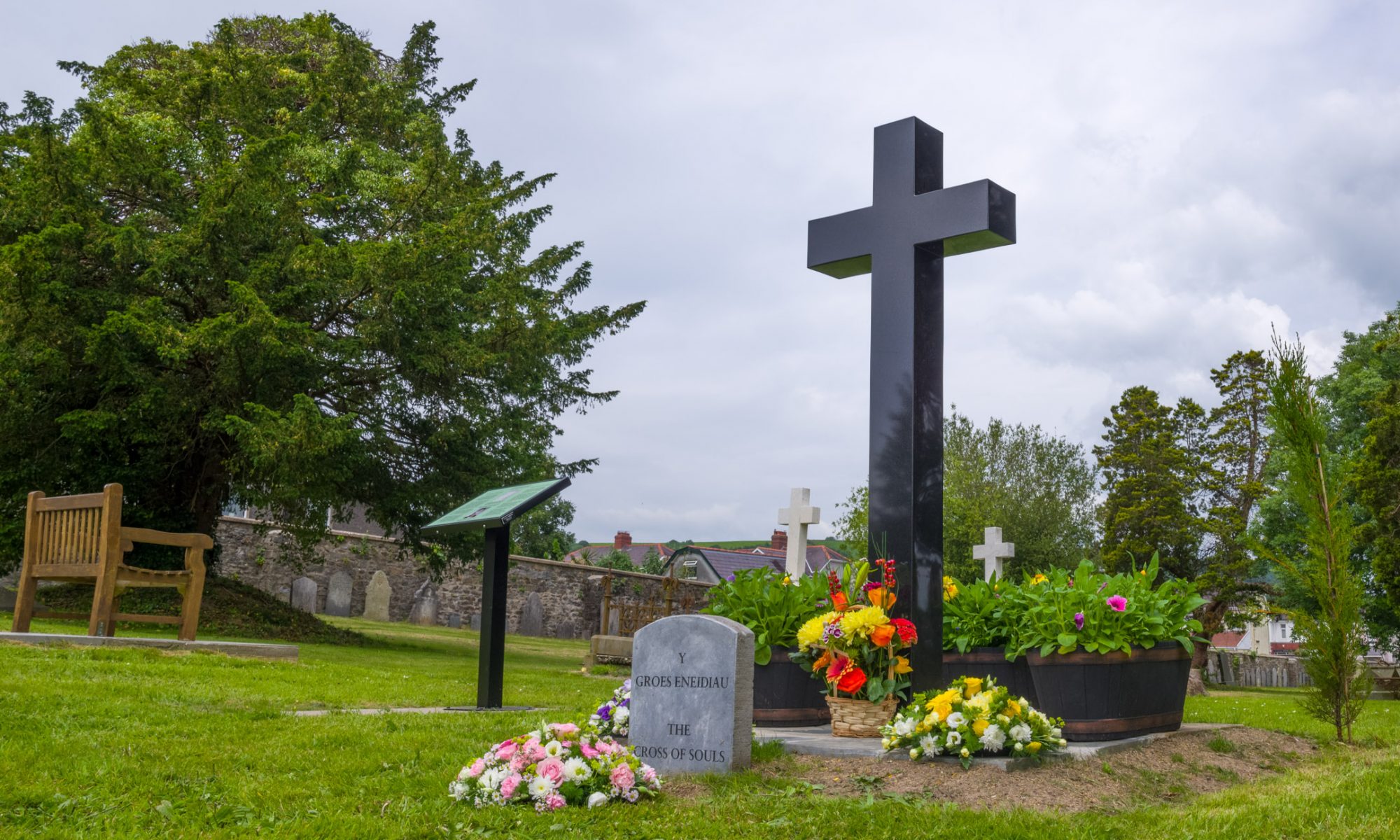
The following story, published exactly as it was printed in 1848 tells the story of the fate of Thomas Evans, who was buried in St David’s cemetery a few days after publication. Sadly his luck run out on that fateful day in December 1848 and he has no known grave.
May he rest in peace.
FATAL ACCIDENT
-On Tuesday last, at half past six in the morning, the body of a man named Thomas Evans, but better known by the soubriquet of Twm Nant y Nanni, was discovered lying partially immersed in the stream which runs from the Tin Works, near the factory, and afterwards empties itself into the Towy, being the surplus water of the works. He was quite cold and dead, having been so apparently for some time. An inquest was held upon view of the body at four o’clock on Tuesday afternoon, at the Bear Inn, Water street, before John Hughes, Esq., coroner, when the following evidence was adduced in explanation of the cause of deceased’s death.
Griffith Lewis, a fisherman, deposed:- “At six o’clock this morning, I went to the Tin Works, and at half-past six I returned towards home. As I came to the end of the bridge near the factory, I saw a large black heap on the bank at the right hand side, and as it was not quite light, I could not make out whether it was a dog or man. I went down to it, and put my hand upon the person’s head and shoulder, and found it was deceased. He had a stick in his hand. There were two men belonging to the works standing near, named Thomas Edwards and John Evans, and I called them to my assistance. We lifted him up to the grass, and he was taken home by the direction of Mr. Parcel, while I informed the coroner of the occurrence. Deceased followed no occupation, and was accustomed to go to the works at all hours of the night, and remain there till the morning. When I found him he was immersed in water to his middle, but his feet were not reaching the bottom of the water. The upper part of his body was on the grass bank. His clothes were entirely wet. The water was about nine feet deep, but the bridge was blocked up in consequence of the floods, so that there was no current. Deceased was quite cold and stiff. We could hardly get his arms straight by his side. He was as cold as ice, and I believe he had been dead for some hours. I account for his being found upon the bank, partly out of the water, by observing that the tide and flood had previously been much higher, but it had receded and left him in that position. He had been always weak in his intellect”. Mary Evans, wife of the deceased, deposed that at nine o’clock the preceding night her husband and herself went to bed in their house in Goose street. She awoke about three o’clock and discovered that deceased had risen and left the house. She never saw him alive afterwards. He was accustomed to go out at all hours of the night, and used to say that he had been at the Tin Works. He was weak in intellect, and in the habit of rambling about. She and her husband received 4s. a week parochial relief. Deceased never attempted, or threatened to attempt, to destroy himself. P. C. Miles Davies deposed that he saw the deceased’s body stripped, and could discover no marks of violence upon it. The coroner, in summing up, observed that although it was not strictly evidence, yet he could inform the jury that it was more than probable the deceased fell down from the opposite bank to that on which he was found, as there were deep foot-marks on the rubbish opposite. The height of the bank being at least 12 or 15 feet, the mere force of the fall would naturally project him completely across the stream, which was not many feet wide, and his legs might have become fast in the bushes, which prevented his escape. The jury without hesitation, returned a verdict of “found dead”, but how or by what means he met his death, there was no evidence to determine.”
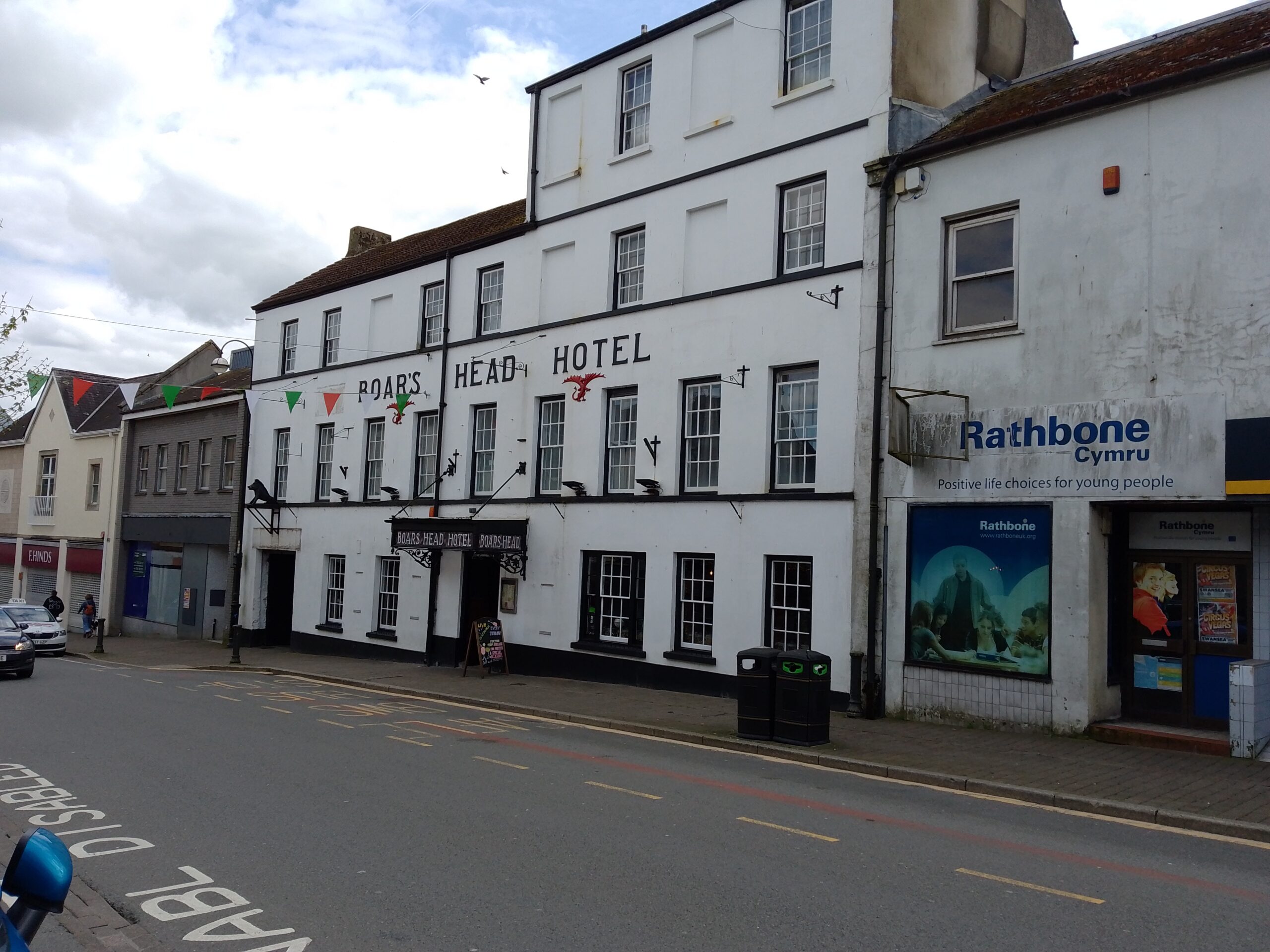
It should be mentioned that about 23 years ago, a waggon load of hay was accidentally emptied upon the deceased in the stables of the Boar’s Head Hotel, and he remained in that covered condition for three days and three nights. (A fully loaded wagon, often piled high with loose straw or hay, typically held roughly 1 ton – approx 2000 lbs) When discovered he was supposed to be dead, and carried home in that state, but restoratives being applied, he recovered, and met with the above fatal accident in the 64th year of his age.
8TH DECEMBER 1848. THE WELSHMAN.