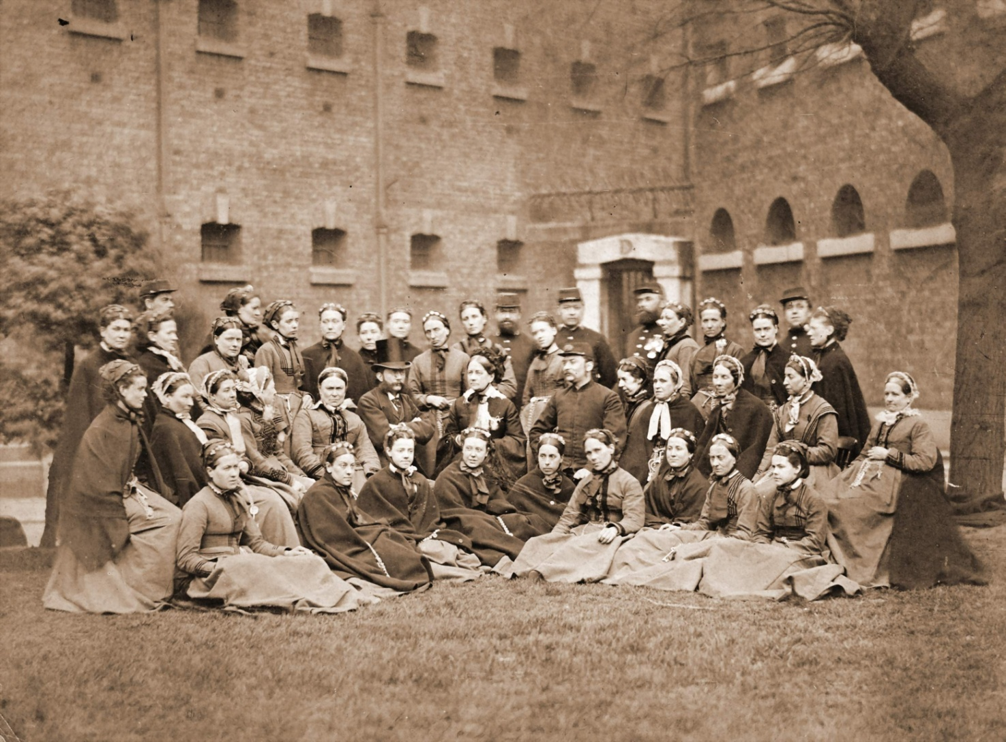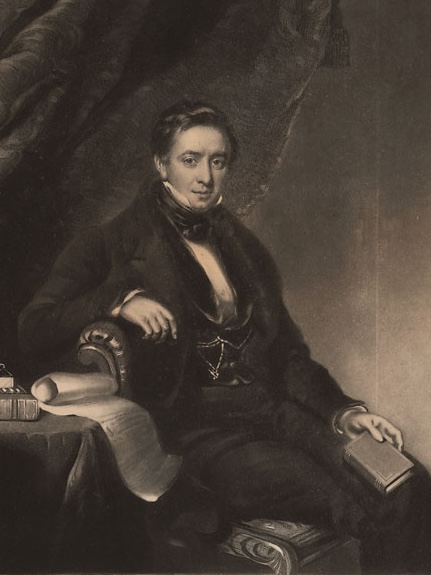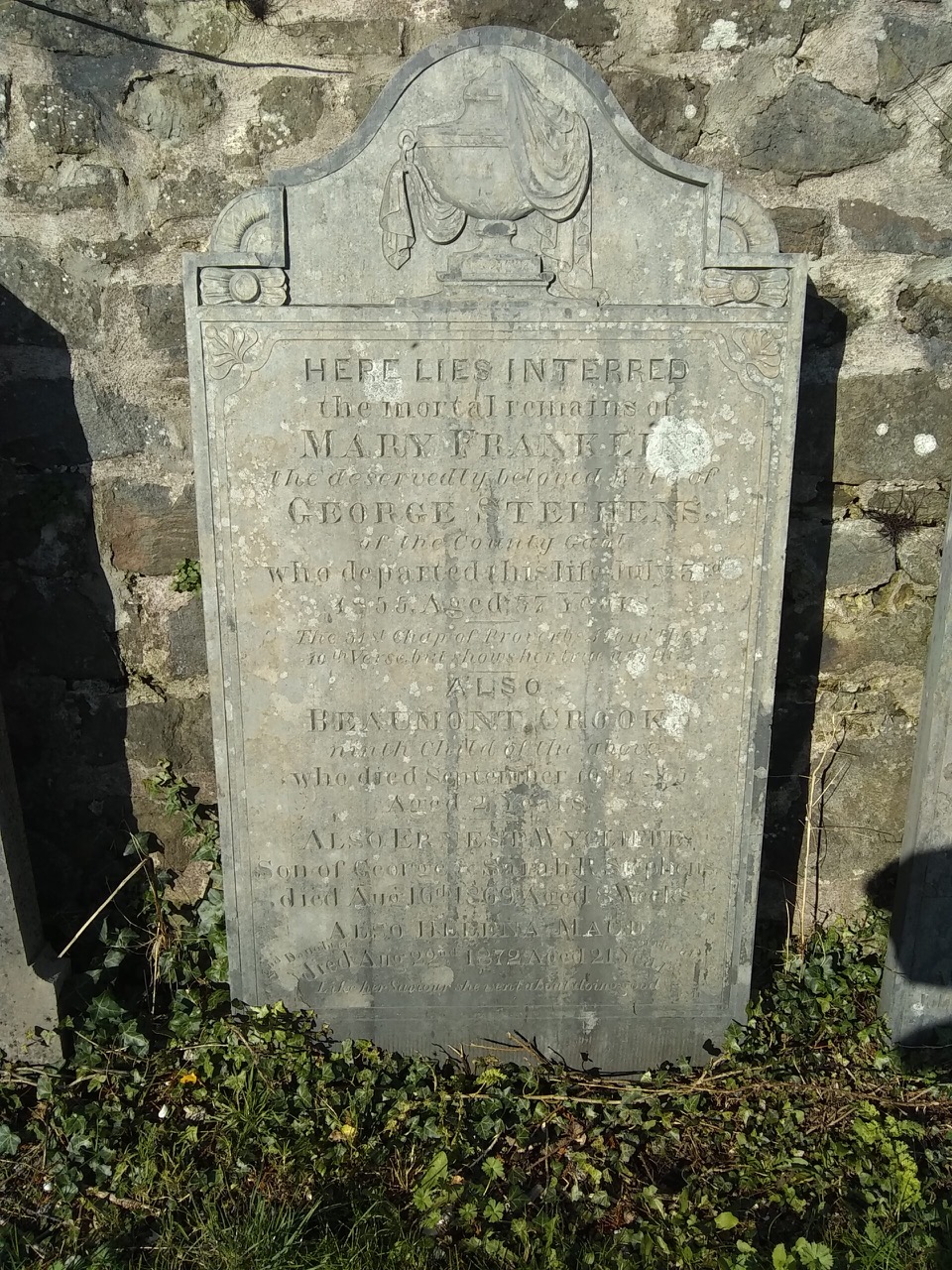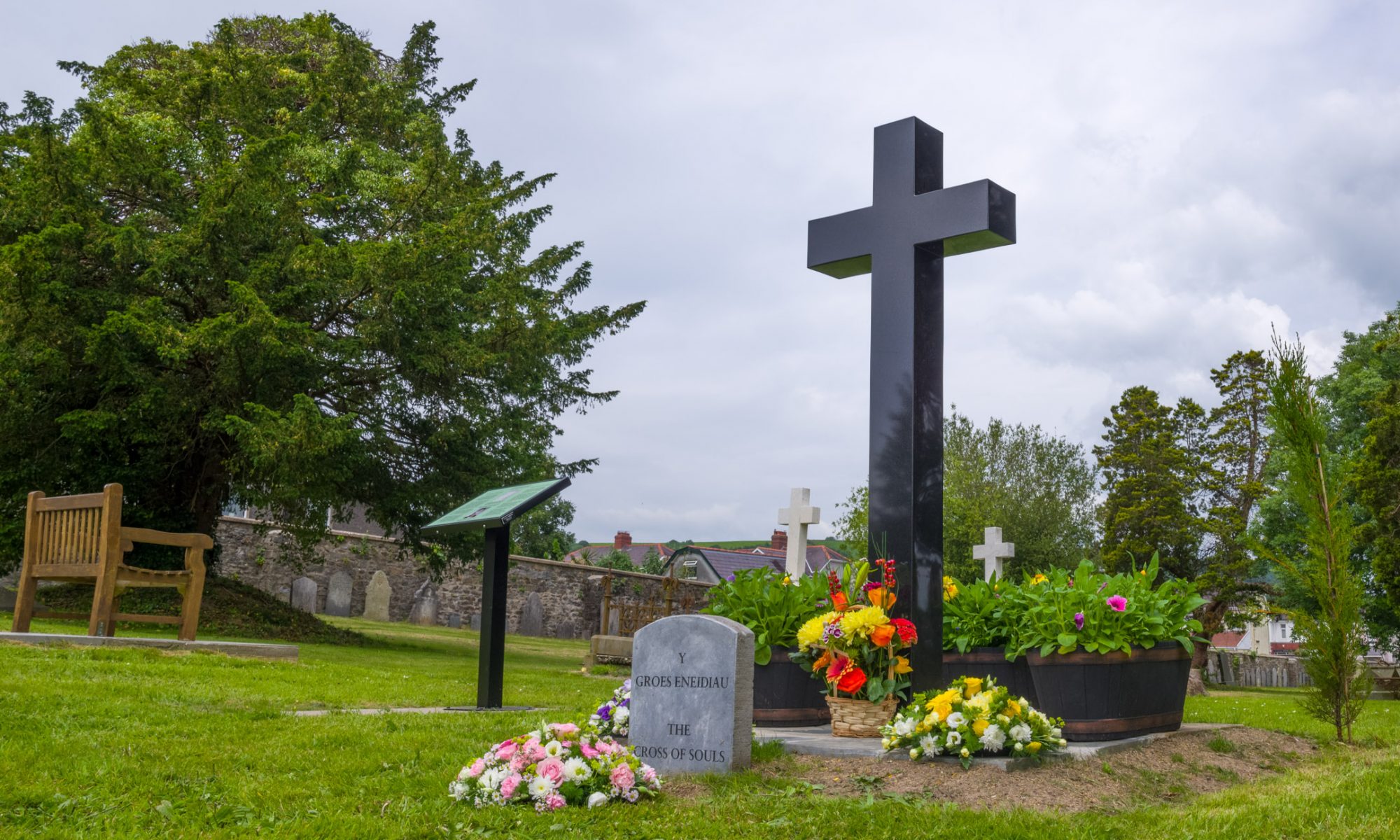
Mrs Mary Franklin Stephens 1798 – 1855 – Wife of the Governor of Carmarthen Prison features elsewhere in the list of “What’s in a Name” for helping her husband in the development of photographing inmates of the Prison – a world first. This separate story however published in the WELSHMAN newspaper on the 23rd April 1852 tells of her involvement in the capture of Samuel Williams who had escaped from the Prison a week before, but decided to return to try and help a female prisoner called Mary Blake to escape herself. As you will see the attempt failed and the assailant was recaptured by Mrs Stephen’s husband George, and subsequently sent to a further term of 7 years transportation for feloniously attempting to rescue Mary Blake from custody under sentence of transportation. Life was certainly not easy in being the Governors wife of what was a very difficult environment to live in, not withstanding that she also had nine children to deal with. The group photograph that is reproduced below of the Governor and his wife and staff of the Prison must have been taken prior to 1855 as this was when Mrs Stephens passed away. Photography was of particular interest to George Stephens and this early print is a rare survivor. Thanks are given to Carmarthen Museum for permission to reproduce it for this story. Mary’s remains and those of a number of her children are commemorated on the surviving headstone which is also shown here. It was removed to the edge of the cemetery in 1977 and the reference number is 755 on the website database search engine. The precise location of her grave can therefore be determined with some accuracy as a result.
Here then is the article that appeared in the Welshman Newspaper in April 1852.
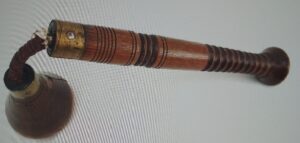
ATTEMPT AT RESCUE FROM GAOL,—On Monday night last an attempt was made from the outside of the county gaol to affect the rescue therefrom of Mary Blake, a female prisoner, who is under sentence of 7 years transportation. Mr. Stephens, the governor of the gaol, suspecting that something of the sort should be attempted, made arrangements to prevent it, and if possible, to secure the person who should make the effort and for that purpose early in the evening secreted himself in a small summer house in his garden, which is situated on the outside of the walls of the prison, to await the expected visitant, whilst Mrs. Stephens, the governor’s wife, was watching inside the gaol to give notice of any danger that might arise there. About nine o’clock at night a man was seen by Mrs Stephens to climb over the garden wall into the garden and commence preparations to effect the contemplated rescue. A signal was given from the inside of the gaol by Mrs Stephens, and then Mr Stephens made towards the fellow to secure him, when he attempted to re-climb the garden wall and escape, in doing so completely shattering a glazed frame; and finding he had not time to get away comfortably, he turned round and ran across the garden with Mr. Stephens at his heels, who there secured him. He turned out to be a man about 28 years of age, named Samuel Williams, who had been liberated from the gaol on the previous Saturday, having been confined there for nine months for house-breaking in Llanelli. Upon being caught he seemed inclined to resist, but finding he was not likely to gain much by it, he quickly said, “ I’ll go with you, sir, I’ll go with you.” He was then taken into the prison and searched, when the turnkey found in his bosom a “life-preserver”* apparently of his own manufacture ( Often euphemistically termed a “life preserver,” this compact, easily concealable truncheon was designed not for rescue at sea, but as a blunt-force weapon for self-defence and subduing individuals without lethal force. Naval personnel also carried them as both practical tools and symbols of authority. Their use extended beyond ships to dockside policing and crowd control. The durable wood construction and rope linkage were ideal for maritime environments, while the non-lethal design made them suitable for maintaining order without escalating violence) also in the garden a rope was found with which he had intended to effect his object. He told the turnkey when locking him up that he had promised the woman and he could not help performing his promise. It also appears that another man who had been convicted with him was on the outside of the garden to give him notice of approach. D Prytherch Esq., one of the visiting justices, made an examination into the circumstance yesterday, which resulted in his committing the fellow for trial to the quarter sessions on the charge of feloniously aiding an attempt at escape from gaol.
THE WELSHMAN 23rd April 1852 page 2