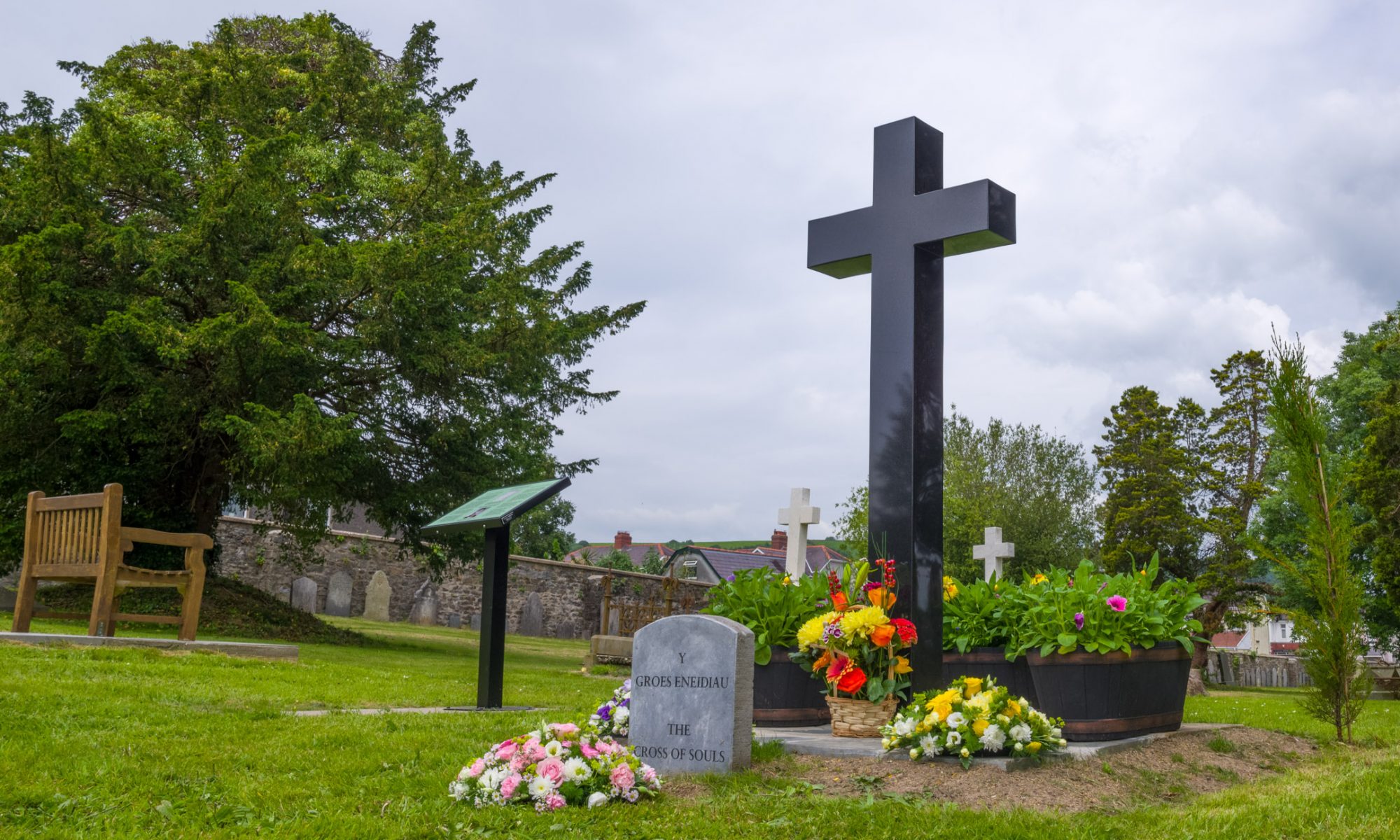
The following harrowing and distressing report appeared in the local press in 1850, at a time of great peril for many in the community with the outbreak of Cholera in Carmarthen. However, despite the severity of the illness of this poor infant baby she was left without proper medical help and supervision that would have eased her suffering at the very least had she been seen promptly, and also would have helped her poor mother who it seems took great care of her newborn child as best as she could under very difficult circumstances. Single mothers were often ostracised and frowned upon, and in the case of Rebecca Dapper, she was no exception. Somewhere in this cemetery lie Mary’s remains, buried in a paupers grave, but she is not forgotten. May she rest in peace.
INQUEST.—An inquest was held on Monday evening last, at the Carmarthen Union Workhouse, before John Hughes Esq., coroner, upon view of the body of a child named Mary Dapper. The infant’s mother, Rebecca Dapper, deposed that it was born in Haverfordwest, on the 18th of March last. She was admitted into the Workhouse of this Union on the 19th of April, with the child, who was suffering from convulsions. She went to bed with deceased on Sunday night, and on awaking the next morning about 4 o’clock, discovered the child dead and quite cold. When she came to the Workhouse she told the Governor that the child was ill, but no doctor saw it for two days, and then no medicine nor advice was given, the medical officer going off in a minute. During the ten days she was in the Workhouse, the doctor gave her no medicine, and she was compelled even to wash clothes with the child in her arms. She had given the child some medicine which she had obtained at the Infirmary before coming to the Workhouse. John Johnes, master of the Workhouse, stated that the mother and child were admitted upon a relieving officer’s order, and he sent them to the medical officer, who was not at home, and she returned with a certificate from his brother. He took her into the house instead of placing her in the vagrants ward. The certificate stated that the child was suffering from purulent opthalmia. The mother did not complain of the child’s illness, although she had the opportunity of doing so three times a day. Mr. John Lewis Williams, surgeon, deposed that he saw the child on three separate occasions, and from the first told the mother he had no hopes it could survive. It was suffering from ulceration of both eyes occasioned by the venereal disease. It had a red rash all over its body, with enlargement of the mesenteric glands and general emaciation. He gave it medicine and in his opinion death was occasioned by mesenteric disease**. The jury returned a verdict of Natural death.
THE ABOVE STORY WAS PUBLISHED BY THE WELSHMAN ON MAY 3RD 1850 PAGE 3
Purulent ophthalmia (often referring to ophthalmia neonatorum when seen in newborns) is a severe, puss-producing bacterial conjunctivitis.
**Mesenteric disease primarily refers to mesenteric ischemia, a serious condition where narrowed or blocked blood vessels restrict blood and oxygen flow to the small and large intestines.